
Understanding the Ross Carbonite Code
As churches grow their livestream and production ministries, some reach a point where entry-level systems no longer meet their needs. For churches with the budget and leadership to consider Ross systems, an important question often comes up: should we stay with a traditional SDI workflow, or move toward IP-based video? Understanding where Ross Carbonite Code fits in helps churches make that decision clearly and confidently.
This guide is written for churches evaluating Ross solutions and trying to decide how SDI and IP workflows fit into their long-term plans.
SDI Is Still a Strong and Reliable Choice
It’s important to say this upfront:
SDI is not outdated.
Many large churches rely on SDI because it is:
- Extremely reliable
- Predictable during live services
- Easy to troubleshoot
- Familiar to volunteers and technical directors
Traditional Ross Carbonite hardware switchers are designed around SDI workflows that prioritize stability. For churches running a single sanctuary or fixed production room, SDI often remains the simplest and safest choice.
Why Churches Start Considering IP Workflows
Churches usually don’t explore IP video without a reason. Common motivations include:
- Multiple rooms or venues on one campus
- The desire to move video between spaces without long cable runs
- Temporary or flexible production setups
- Centralized production using networked systems
IP workflows allow video to move across a network instead of dedicated video cables. This flexibility can be powerful—but it also changes how systems are designed and supported.
What “IP Video” Usually Means in Churches
In church production environments, IP video most often means NDI.
NDI allows video sources to travel across a network and be discovered easily by compatible devices and software. It’s designed to be more approachable than traditional broadcast IP systems and is widely used in live production, streaming, and worship environments.
This is the IP model that Carbonite Code is built around.
Where Ross Carbonite Code Fits In
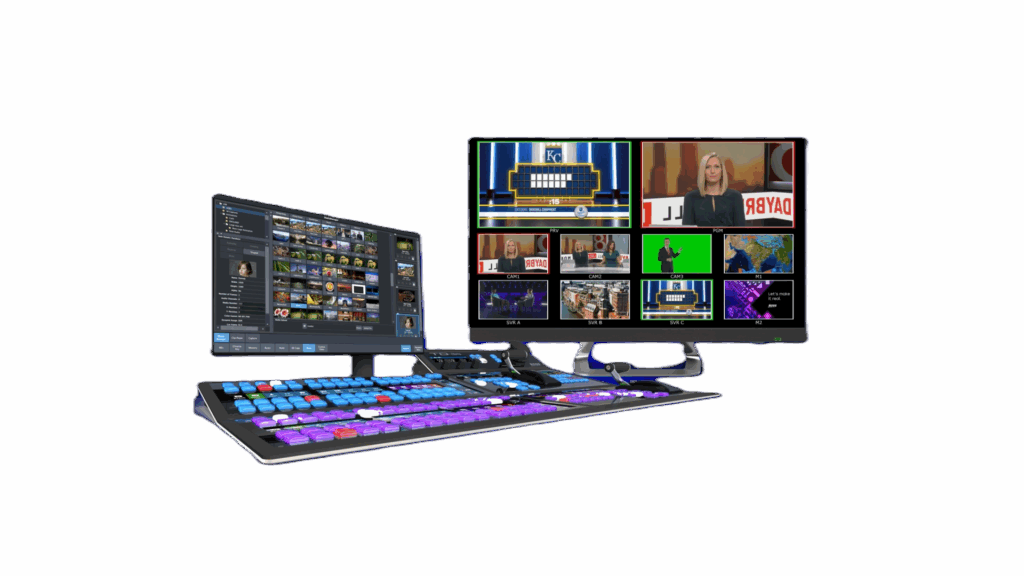
Ross Carbonite Code is a software-based production switcher designed for NDI-based production workflows, rather than SDI-based inputs and outputs.
Carbonite Code is intended for churches that want to:
- Build production workflows around NDI
- Move video flexibly across a network
- Use software-driven switching instead of dedicated hardware
- Access Ross-quality production tools in IP-centric environments
Carbonite Code is not a hybrid SDI/IP bridge and is not an incremental upgrade from SDI. It represents a deliberate architectural shift toward NDI-based production.
Traditional Carbonite vs Carbonite Code
| Feature | Traditional Carbonite | Carbonite Code |
|---|---|---|
| Platform | Hardware switcher | Software-based switcher |
| Primary Signal Type | SDI | NDI (IP video) |
| Typical Use Case | Fixed production rooms | Flexible, networked workflows |
| Volunteer Familiarity | Very high | High with training (NDI workflows differ from SDI cabling) |
| Infrastructure | Dedicated video cabling | A solid, gigabit network built for NDI |
| Best For | Churches prioritizing reliability | Churches intentionally embracing NDI |
This distinction matters: Carbonite Code does not replace SDI systems—it serves a different production philosophy.
When a Traditional Carbonite System Is the Better Fit
A traditional Carbonite hardware switcher is usually the right choice if your church:
- Produces from a single main room
- Prioritizes maximum reliability on Sundays
- Relies heavily on rotating volunteers
- Prefers proven, cable-based workflows
For many churches—even very large ones—this remains the most practical and confident decision.
When Carbonite Code Makes Sense
Carbonite Code becomes a strong option when a church:
- Intentionally builds around NDI
- Needs flexible routing between rooms or spaces
- Wants software-based production control
- Has dedicated technical leadership or integrator support
It’s best viewed as a strategic architecture choice, not a small step up from SDI.
A Helpful Way to Frame the Decision
A healthy way to think about this choice is:
SDI prioritizes certainty.
NDI prioritizes flexibility.
Ross offers solutions for both approaches—but they are designed for different production goals.
Final Thoughts
Choosing between SDI and IP workflows isn’t about which technology is better. It’s about alignment with your church’s needs, team, and long-term vision. Traditional Ross Carbonite systems excel in stable, SDI-based environments. Ross Carbonite Code fits churches that are intentionally embracing NDI and software-driven production. By understanding these roles clearly, churches can invest confidently without overbuilding or overcomplicating their systems.
Check out our related posts:
- Understanding NDI vs SDI Workflows for Church Production
- Best Network Switches for Livestreaming and NDI Systems
This post may contain affiliate links. As an Amazon Associate, I earn from qualifying purchases.